 A NEW PERSPECTIVE
REALITY CAPTURE / PROPERTY INTELLIGENCE

DATUM VERTEX TECHNOLOGIES
MIAMI, FLORIDA · BUILT FOR REAL ASSETS
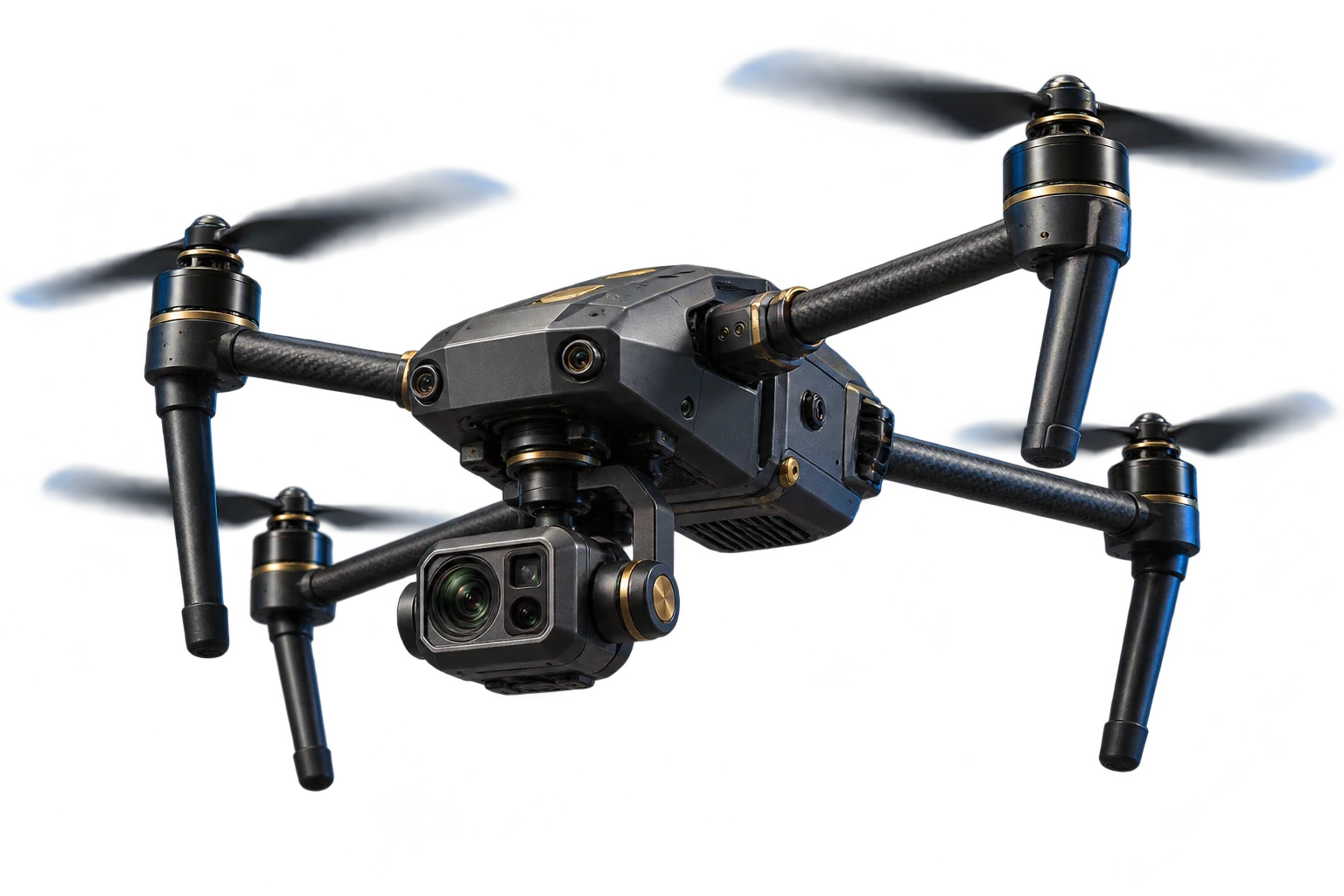
Illustrative flight & architecture
What Exists Today
Owners buy, refinance and budget against reports that are difficult to compare — and findings that still need an engineering response.
Static reports offer a snapshot, not a change history.
Hard-to-reach areas can remain unobserved.
Photos alone do not establish structural significance.
Multiple handoffs separate the finding from the fix.
Why Now
DVT connects the two — a repeatable record that shows what changed, not just what exists today.
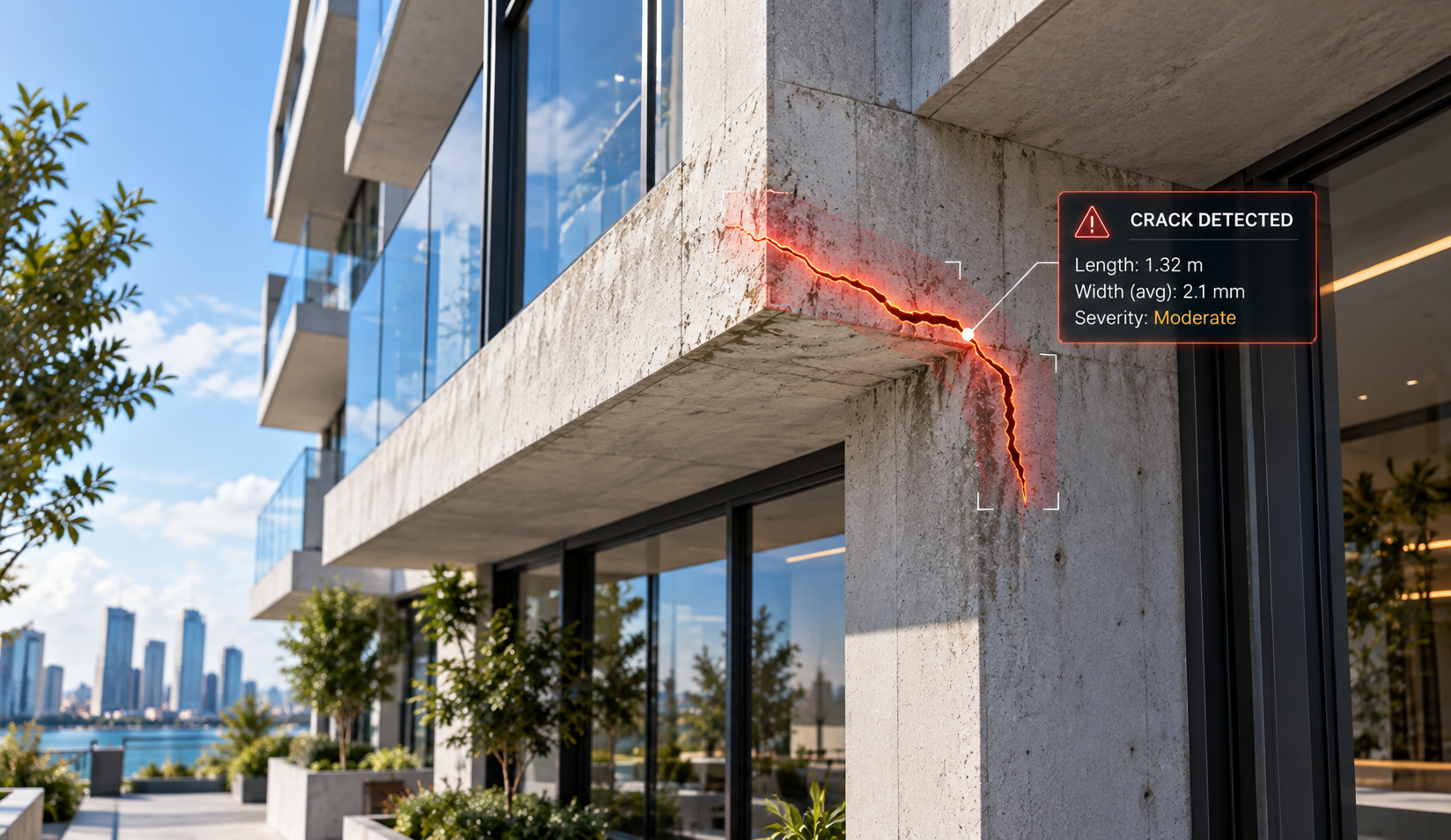
Buildings age continuously. Cracks grow, corrosion progresses, movement occurs — but most of that change goes undocumented between inspections.

Owners are periodically forced to prove condition when outside events trigger action.
Reaccreditations and inspections cycles
Property condition assessments and financing
Pre- and post-storm documentation
Acquisition and disposition due diligence

Proof · South Florida Bridge
We scanned the underside structure of a bridge no one could see. Over time it had deteriorated and moved — no longer safe for its rated loads. It was closed later that day.
01
Underside imagery
02
Critical zones assessed
03
Bridge closed that day
04
Repair solution engineered
05
Returned to operation
The value was not another image. It was a decision — and a path to repair.
01
THE TIMING PROBLEM
A photograph captures a moment. A report records a visit. The harder question is what changed between them.
DVT connects dated field evidence, reviewed findings and the next step in one property record. A clearer history for the people buying, operating and financing the building.
What’s here?
What changed?
What happens next?
02
A Record That Builds Over Time
Explore how the record establishes a baseline, separates signal from noise, and returns each year to measure what moved.
A shared starting point.
START WITH EVIDENCE
Establish dated imagery and measurable 3D context for the agreed areas
of your property. Give future reviews a consistent place to start.
Capture date and defined coverage
Images linked to building locations
Documented access and data limitations
PUT FINDINGS IN CONTEXT
Bring observable conditions into qualified technical review. Connect each finding to its location, supporting evidence and an appropriate next step.
Observed conditions and reviewed findings
Areas requiring closer investigation
Priorities for repair or planning discussions
CARRY THE RECORD FORWARD
Revisit the agreed areas and compare suitable datasets. Document repairs, new observations and the next review so the property’s history stays connected.
Repeat observations at defined locations
Repair and follow-up documentation
A growing record for future decisions
03
SIX SERVICES. ONE CONNECTED RECORD.
For acquisitions, everyday ownership and the moments that change a building.
Assess and document existing building conditions before a purchase. Help buyers understand visible concerns, areas needing further investigation, and potential repair needs before making an investment.
Establish a dated record of the building’s current condition. Combine detailed imagery, mapped observations, and engineering review to document concerns and help owners prioritize next steps.
Return periodically to scan and inspect the property, compare changes against previous assessments, and document repairs. Maintain an organized condition history owners can reference year after year. This is a key offering and should receive strong emphasis.
Document property conditions following storms or other damaging events. Where previous records exist, compare before-and-after conditions to support insurance claims, repair planning, and recovery decisions.
Turn inspection findings into actionable engineering evaluations, repair designs, scopes of work, and construction documents. Show how DVT helps clients move from identifying a concern to planning its resolution.
Use laser scanning, drones, and photogrammetry to create accurate existing-condition measurements and digital models. Include interior and exterior capture, Scan-to-BIM, and documentation for renovations, architectural design, and construction coordination.
Professional assessments, regulated inspections and design services are scoped with appropriately qualified and licensed professionals.
04
Evidence to Action
Capture accessible structure. Combine AI-assisted review with engineering judgment. Return to measure what changed.
01
Start with your property, the question you need answered and the areas that need attention.
02
Select the right mix of drone photogrammetry, laser scanning and field documentation. Add GPR or subsurface investigation where the scope calls for it.
03
Connect observable conditions to qualified technical review. AI-assisted tools can help identify candidates for closer examination.
04
Support the repair or planning decision, document the follow-through and define when the record should be updated.
05
For owners, investors, lenders and the
teams responsible for the next decision.
Our Focus
Acquisition diligence. Portfolio baselines. Repeat condition records. A continuous view through ownership.
Existing-condition documentation for properties, renovations and complex interiors.
Reality capture, subsurface investigation and technical documentation for demanding physical assets.
Miami-based, serving projects across the region. Speak with us about the scope and location of your asset.
06
A Millennium Company
Datum Vertex Technologies brings reality capture, property documentation and engineering support into a connected approach to building condition.
Our foundation is Millennium’s 20+ years of mining and heavy-industrial asset experience — from Argentina to New York. Our focus is helping owners understand their buildings earlier, and carry that understanding forward.
“Most scanning companies don't seal a drawing. Most engineering firms cannot fly. DVT brings both into one solution..”
THE FOUNDATION
20
+
years of Millennium’s
industrial experience
THE TIMING PROBLEM
A digital twin or 3D model can be part of the record. DVT’s approach connects that spatial context to dated evidence, reviewed findings and documented next steps over time.
Capture provides evidence for review. Required inspections, engineering conclusions and professional filings need the appropriate qualified engagement. We define those requirements with you at the start.
Yes, when the capture scope, reference control and data quality support a meaningful comparison. We agree what will be revisited and document the limitations of each dataset.
Property size, height, access, required detail, capture methods, review scope and deliverables all matter. Share those details and we can develop a scope suited to your decision.
We can scope deliverables around your owner, property manager, architect or engineering team, including the required formats and the decisions they need to support.